708 Church St Unit A, Decatur, GA, 30030
Bonded & Insured
Decatur, GA

Roofing Contractor in Decatur, GA Built for Storms, Trees and Old Homes

Decatur roofs have a lot to deal with. About 50 inches of rain falls every year, spring hailstorms hit hard, summer attics bake in mid-90s heat, and big oaks and pines lean over almost every house. Add century-old plank decking, tired chimney flashing and built-in gutters, and a small leak can turn into rotted framing quickly. Decatur Roofing Company has been fixing exactly these problems since 2015. We handle everything from a single cracked pipe boot to a full tear-off and re-deck, and we'll tell you plainly what your roof needs and what it doesn't.

We work on the roofs our neighbors actually own: Craftsman bungalows in Oakhurst and Winnona Park, slate and Tudor rooflines in Druid Hills, brick ranches in North Decatur and Tucker, and low-slope commercial roofs in Midtown. We know how permits differ between the City of Decatur, Atlanta and unincorporated DeKalb, how historic review works in the MAK district and Avondale Estates, and how to stage a job on a tight, tree-shaded intown lot without damaging your landscaping.

  • Serving Decatur and intown Atlanta since 2015
  • Fully bonded roofing contractor
  • Fully insured crews
  • Financing available on repairs and replacements
Free Estimate

Request Your Free Estimate

No obligation. Fast, honest quotes.

Prefer to talk? Call (404) 738-9188 — your details are never shared.

Credentials & Certifications BondedInsuredFinancing available
What We Do

Roofing Services for Decatur Homes and Businesses

Every service below is shaped by what we see on local roofs every week: tree strikes, hail, heat-cooked shingles and old construction. We'll recommend the smallest fix that actually solves the problem, and we'll explain why when a bigger job truly makes more sense.

Roof Repair

We find and fix leaks, replace damaged or missing shingles, reseal penetrations, replace pipe boots and rebuild flashing. Most repairs are done in a single visit, and we show you photos of the problem and the finished fix.

We trace leaks from the attic side and the roof surface, matching shingles as closely as possible. Chimney and wall leaks get new step and counter flashing rather than another layer of tar, which only buys a few months.

Chimney flashing on Oakhurst and Winnona Park bungalows, pipe boots cracked by summer UV, slate and tile spot repairs in Druid Hills, and wind-lifted shingles after spring storms in Tucker and Stone Mountain make up most of our repair work.

Best for: Roofs with plenty of life left that have a specific leak, isolated storm damage or worn flashing. Ideal when the rest of the shingles still lie flat and hold granules.

Explore
★ Specialty

Roof Replacement

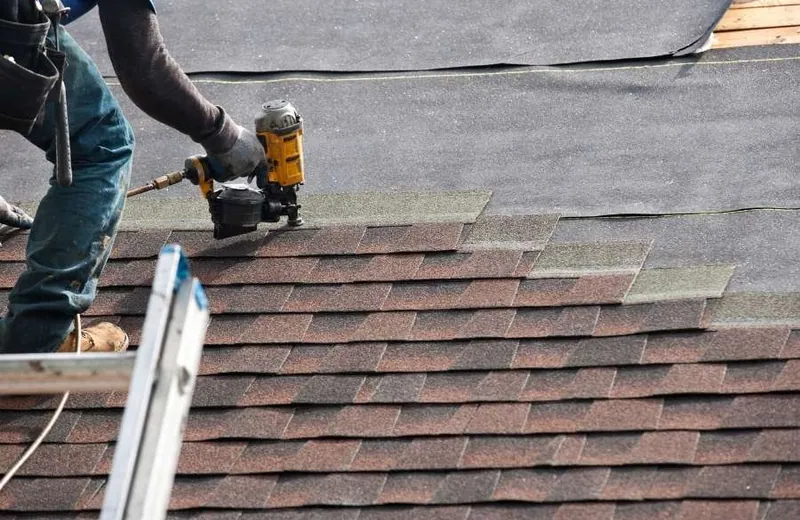
Full tear-off of your old roof, deck inspection and repair, new underlayment, ice and water barrier, flashing, ventilation and shingles or metal. We handle permits for your jurisdiction and haul everything away when we're done.

We strip to the deck, replace rotted planks or add plywood overlays, install synthetic underlayment and ice barrier at eaves and valleys, then follow the manufacturer's installation instructions exactly so your shingle warranty stays valid.

Older Decatur homes often hide two layers and plank decking, so we quote decking contingencies upfront. We pull permits with the City of Decatur, Atlanta or DeKalb, handle historic-district paperwork in MAK or Avondale Estates, and protect trees and plantings on tight lots.

Best for: Roofs 18–25+ years old, roofs with widespread hail damage, repeat leaks, curling shingles or soft decking, and homeowners preparing to sell or add solar.

Explore

Roof Installation

New roof systems for additions, teardown rebuilds, garages and material upgrades, including architectural shingles, standing-seam metal and synthetic slate. We coordinate with your builder or architect on details, ventilation and timing.

We design the system around the roof's pitch and use: proper underlayment, drip edge, valley treatment, ridge ventilation and clean transitions where shingles meet low-slope or metal sections.

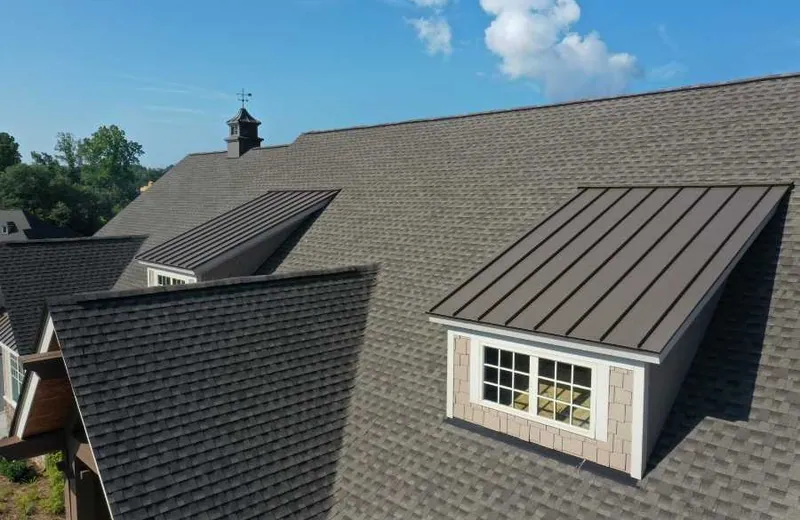
Infill and teardown rebuilds in Oakhurst, Kirkwood and East Atlanta Village often mix architectural shingles with standing-seam metal porch roofs. We also tie new additions on historic homes into existing rooflines so they pass design review.

Best for: New construction, home additions, accessory dwellings, and homeowners upgrading to metal or synthetic slate for longevity, curb appeal or a solar-ready roof.

Explore

Roof Inspection

A thorough look at shingles, flashing, valleys, gutters, vents, attic ventilation and decking, followed by a written report with photos. We tell you what's urgent, what can wait and roughly how many years your roof has left.

We walk the roof where it's safe, check the attic for staining, moisture and airflow, and photograph every issue. After storms we document hail and wind damage the way insurance adjusters expect to see it.

Common requests include post-hail checks in Tucker and North Druid Hills, pre-purchase inspections on historic Decatur homes, and second opinions when a door-knocking storm crew says a roof needs replacing.

Best for: Home buyers and sellers, anyone after a hail or wind event, roofs over 12 years old, and homeowners who want a clear plan before spending money.

Explore

Roof Maintenance

Scheduled care that keeps a roof from aging early: clearing valleys and gutters, soft-wash algae and moss treatment, resealing penetrations, replacing worn pipe boots and catching small problems before they become leaks.

We recommend checkups once or twice a year, typically spring after storm season and late fall after leaf drop. We never pressure wash shingles; we use gentle treatments that won't strip granules.

Homes under heavy canopy in Medlock Park, Lake Claire, Glennwood Estates and Belvedere Park benefit most, since pine needles and oak leaves pack valleys year-round and shaded north slopes grow algae fast.

Best for: Tree-covered properties, historic homes with built-in gutters, landlords and property managers, and anyone who wants their roof to reach its full expected lifespan.

Explore

Commercial Roofing

Repair, maintenance and replacement for flat and low-slope commercial and multifamily roofs, including TPO, EPDM and modified bitumen. We work with owners, property managers and HOA boards on budgets, scheduling and tenant disruption.

We inspect membranes, seams, drains, parapets and rooftop equipment curbs, then recommend patching, targeted section replacement, or a full system based on condition, drainage and remaining service life.

Midtown condos and mixed-use buildings, small retail along Decatur's commercial corridors, and low-slope porch or addition roofs on intown homes all need membrane experience. Ponding after heavy summer storms is the issue we address most often.

Best for: Property managers, HOA boards, small business owners and landlords with flat or low-slope roofs showing ponding, seam failures, blistering or recurring interior leaks.

Explore
★ Specialty

Emergency Roofing

Fast response when a tree, limb, hailstorm or wind event opens your roof. We tarp or board up the damage to stop water, document everything for your insurer and schedule permanent repairs as soon as conditions allow.

We secure heavy-duty tarps properly so they hold through follow-up storms, photograph damage inside and out, and coordinate with your tree removal company so the roof can be safely dried in.

After tropical remnants like Helene or spring wind events, fallen oaks and pines across Druid Hills, Candler Park, Decatur and Scottdale create urgent leaks. Quick drying-in matters in our wet climate, where the next storm is rarely far off.

Best for: Tree strikes, active leaks during storms, missing sections of roof after high wind, and any situation where water is coming into your home right now.

Explore
Know The Signs

Common Roofing Problems We See Around Decatur

Most roof failures here trace back to a few local culprits: heavy rain, falling trees, summer heat and old construction hiding under newer shingles. Knowing the warning signs helps you catch a $400 repair before it becomes a $14,000 replacement. Here are the problems we fix most often.

Storm and Falling-Tree Damage Emergency

Structural or surface damage from limbs or whole trees hitting the roof, usually during thunderstorms, tropical remnants or ice storms. It can puncture decking, crack rafters and leave the house open to rain within minutes.

Why it's common here

Decatur sits under one of the densest urban canopies in the country. Mature water oaks and pines are tall, shallow-rooted and often overhang the roof, and saturated red clay after a few days of rain makes whole-tree failures much more likely. Helene in 2024, Zeta in 2020 and Irma in 2017 all dropped trees across DeKalb. Spring straight-line winds do the same thing on a smaller scale nearly every year, and ice storms add weight that snaps limbs over eaves.

Signs you'll notice
  • Visible limb or trunk resting on the roof
  • Daylight showing through attic boards
  • Sagging rooflines or cracked ceiling drywall
  • Water pouring in during or right after a storm
  • Shingles, gutters or fascia torn away
  • Crushed or bent ridge and roof vents
Local patterns

We see the most tree strikes in Lake Claire, Candler Park, Druid Hills, Medlock Park and Glennwood Estates, where century-old oaks crowd small lots. Calls spike during spring storms and any tropical system tracking up from the Gulf.

Our fix: Emergency tarping and board-up to stop water fast, coordination with your tree service, photo documentation for insurance, then rafter, decking and shingle repair once the tree's cleared.

Hail and Wind Shingle Damage Serious

Bruised, cracked or missing shingles caused by hailstones or high wind. Hail knocks granules loose and fractures the mat underneath; wind lifts tabs and breaks the seal strip, letting rain drive under the shingle.

Why it's common here

March through May is peak severe-weather season in metro Atlanta, and repeated hail events have generated waves of insurance claims across DeKalb and Fulton. Hail damage is easy to miss from the ground, so many homeowners don't know they have it until a leak appears months later, sometimes after their claim window has closed. High heat also softens shingle sealant, and older three-tab roofs on 1960s–80s homes in Tucker and Stone Mountain lose their seal more easily.

Signs you'll notice
  • Dark circular spots where granules were knocked off
  • Heavy granule buildup in gutters or at downspouts
  • Dented gutters, vents or AC fins
  • Creased or lifted shingle tabs
  • Shingles lying in the yard after wind
  • Neighbors getting roofs replaced after a storm
Local patterns

Hail-claim clusters often hit Tucker, Stone Mountain, North Druid Hills and the Clarkston area in spring. Storm chasers follow right behind, so we see a lot of homeowners asking for a second opinion.

Our fix: A documented inspection with photos, a written damage report you can give your insurer, adjuster meetings on request, then repair or full replacement depending on the extent.

Failing Chimney and Wall Flashing Serious

Metal step and counter flashing where the roof meets a brick chimney, dormer wall or skylight. When it rusts, pulls loose or relies on dried-out caulk, water runs behind it and into the framing and ceilings.

Why it's common here

Early-1900s bungalows and Tudors around Decatur almost all have brick chimneys, and many still have original or decades-old flashing that's been 'fixed' with roofing cement several times. Intense summer UV dries sealants out quickly, and our short, heavy downpours push a lot of water against the uphill side of chimneys. Mortar joints also deteriorate, giving water another way in. Homes with several dormers and hips simply have more of these vulnerable intersections.

Signs you'll notice
  • Water stains on ceilings next to the chimney
  • Damp or crumbling mortar joints
  • Thick tar or caulk smeared around the chimney base
  • Rusted or loose metal at wall intersections
  • Peeling paint on interior walls near dormers
  • Musty smell in upper rooms after rain
Local patterns

Most common in Old Decatur, Winnona Park, the MAK district, Kirkwood and Virginia-Highland, where tall brick chimneys and complex rooflines are standard.

Our fix: Remove old flashing and sealant, install new step and counter flashing (reglet-cut into mortar where needed), add a cricket on wide chimneys, and repair any wet decking.

Rotted Plank Decking and Hidden Layers Serious

Deteriorated board sheathing or multiple old shingle layers hidden under the current roof. Rotted planks can't hold nails properly, and extra layers trap heat and moisture while adding weight to aging rafters.

Why it's common here

Many Decatur homes were built with 1x6 or 1x8 plank decks long before plywood. Gaps between boards, decades of minor leaks and trapped humidity from tree shade cause soft spots. Earlier owners often roofed over the old shingles to save money, and the IRC typically caps homes at two layers, so the next replacement must be a tear-off. Red clay settling can also stress older framing. These issues usually stay invisible until the old roof comes off, which is why careful quotes matter.

Signs you'll notice
  • Spongy or bouncy spots when walking the roof
  • Wavy or uneven roof surface
  • Nail pops pushing up through shingles
  • Visible sag between rafters from the attic
  • More than one shingle edge visible at the eaves
  • Dark, stained boards in the attic
Local patterns

Typical in pre-1940 homes in Oakhurst, Old Decatur, East Lake, Kirkwood and Druid Hills, plus older housing stock in East Point and College Park where roof-overs were common.

Our fix: Full tear-off to the deck, replacement of rotted boards, and a plywood overlay where needed so the new roof meets manufacturer and code requirements.

Clogged Valleys and Gutter Overflow Moderate

Leaves, pine needles and seed pods packing roof valleys and gutters, so water backs up under shingles, overflows onto fascia and soaks the foundation. Built-in and box gutters can leak directly into walls.

Why it's common here

Decatur's oaks, pines, tulip poplars and sweetgums shed nearly year-round, not just in fall. Pine straw is especially bad because it mats into a dam. When a summer storm drops heavy rain fast, a half-clogged valley can't drain and water pushes sideways under the shingles. Older homes with built-in or box gutters, common in the historic districts, hide the overflow inside the wall cavity where it rots fascia and rafter tails.

Signs you'll notice
  • Water sheeting over the gutter edge in storms
  • Plants or moss growing in gutters
  • Peeling paint or rot on fascia boards
  • Stains on siding below gutters
  • Debris piles in roof valleys
  • Soil erosion or pooling near the foundation
Local patterns

Worst under heavy pine and oak cover in Medlock Park, Glennwood Estates, Belvedere Park, Lake Claire and Avondale Estates, and on historic homes with original box gutters.

Our fix: Valley and gutter cleaning, repair or relining of built-in gutters, fascia replacement where rotted, and valley metal or upgraded underlayment on repeat problem areas.

Heat Damage from Poor Attic Ventilation Moderate

Premature shingle aging caused by an attic that can't exhaust heat and moisture. Shingles blister, curl and shed granules years early, and trapped humidity can grow mold on the underside of the deck.

Why it's common here

Summer highs in the 90s with heavy humidity make Atlanta attics extremely hot, often far above outdoor temps. Mid-century ranches across North Decatur, Tucker and Belvedere Park were built with minimal soffit and roof vents, and later insulation upgrades frequently blocked the soffits that do exist. The result is a roof that should last 25 years wearing out in 15, plus higher cooling bills all summer.

Signs you'll notice
  • Curling or blistered shingles
  • Granules thinning on south and west slopes
  • Attic feels like an oven on summer afternoons
  • Frost or condensation on nails in winter
  • Mold or dark staining on attic decking
  • High summer cooling bills
Local patterns

Very common in 1950s–60s brick ranches in North Decatur, Medlock Park, Tucker and Belvedere Park, and in older homes in East Point and College Park.

Our fix: Ventilation assessment, then balanced intake and exhaust: soffit vents, baffles, ridge vent, and lighter or cool-rated shingles at replacement time.

Algae Streaks, Moss and Worn Sealants Minor

Black streaks from Gloeocapsa magma algae, green moss growth and cracked rubber pipe boots or sealants. On their own they're cosmetic or minor, but moss holds moisture and failed boots become leaks.

Why it's common here

Heat, humidity and shade are perfect conditions for algae and moss, especially on north-facing slopes under the canopy. Our strong summer UV also breaks down rubber pipe boots and sealants faster than in cooler climates, often within 8 to 12 years. Left alone, moss lifts shingle edges and a cracked boot lets water run straight down the plumbing vent into the ceiling.

Signs you'll notice
  • Black or dark streaks down the roof
  • Green moss on shingles or in seams
  • Cracked rubber around plumbing vents
  • Small ceiling stain below a bathroom vent
  • Shingle edges lifted by moss
  • Dried, cracked caulk at roof penetrations
Local patterns

Shows up on north slopes throughout Decatur, Druid Hills, Lake Claire and Candler Park, and on nearly every roof over about ten years old.

Our fix: Gentle soft-wash algae and moss treatment (never pressure washing), pipe boot replacement, resealing penetrations and zinc or copper strips or algae-resistant shingles.

Transparent Pricing

How Much Does a Roof Cost in Decatur, GA?

Roofing prices in metro Atlanta depend heavily on your home's age, roof complexity and what's hiding under the current shingles. These ranges reflect typical local projects so you can budget realistically before your free estimate.

Typical Project

Leak repair with new chimney flashing

1920s bungalow in Oakhurst; step and counter flashing rebuilt, minor decking repair, interior leak stopped

$650 – $2,200
Typical Project

Architectural shingle replacement on a brick ranch

1960s ranch in Tucker or North Decatur, about 24 squares, single-layer tear-off, new ridge vent and pipe boots

$10,500 – $17,000
Typical Project

Historic home re-roof with re-decking

Two-story Craftsman or Tudor in Decatur or Druid Hills, two old layers, plank deck with plywood overlay, multiple dormers and chimney

$20,000 – $38,000
Typical Project

Emergency tarp after a tree strike

Limb puncture in Candler Park or Scottdale; tarping and board-up to dry in the home before permanent repair

$400 – $1,500
Roof Size and Pitch Primary Factor

Roofs are priced by the square (100 square feet). A typical 1,800–2,200 square-foot ranch in Tucker or North Decatur might need 20–28 squares, while a two-story Tudor in Druid Hills with dormers can need far more. Steep pitches over about 8/12 require extra safety equipment and slow the crew down, which raises labor costs. Multiple hips, valleys and dormers add flashing and cutting time, so a complex roof costs more per square than a simple gable.

Roofing Material Primary Factor

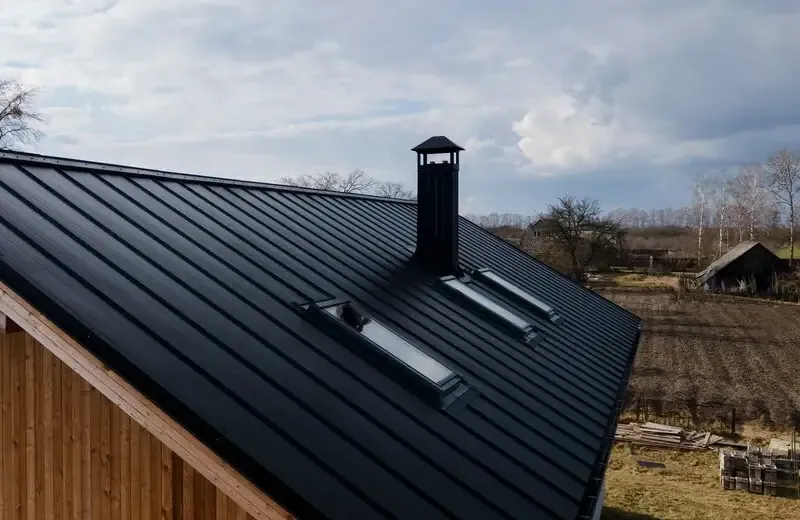
Architectural asphalt shingles are the most common choice here and the most budget-friendly. Standing-seam metal typically costs two to three times as much but can last 40–50+ years and reflects summer heat well. Synthetic slate sits in between and works well where historic review wants a slate look. Natural slate and clay tile repair or replacement, still found in Druid Hills and Avondale Estates, is specialty work and priced accordingly.

Decking Condition and Old Layers Major Factor

Older Decatur homes often have plank decking and one or two old shingle layers. Every extra layer adds tear-off and disposal cost. Rotted boards must be replaced, and some plank decks need a full plywood overlay before new shingles can go on, which can add $1,500–$5,000 or more on a full roof. We price decking per sheet upfront so you know the worst-case number before work starts.

Flashing, Chimneys and Ventilation Moderate Factor

Rebuilding chimney flashing, adding a cricket behind a wide chimney, replacing skylight flashing or upgrading copper valleys all add cost, but they're also where most leaks start. Mid-century ranches often need new soffit vents and a ridge vent to stop heat from cooking the shingles. These upgrades usually run a few hundred to a couple thousand dollars and pay off in longer shingle life and lower cooling bills.

Access, Permits and Historic Review Variable Factor

Small, sloped, tree-shaded lots in Virginia-Highland, Kirkwood or Decatur can complicate dumpster placement and material delivery, and protected trees limit staging. Permit fees vary by jurisdiction. Historic districts may require a Certificate of Appropriateness, adding time and sometimes material requirements. Commercial and multifamily jobs in Midtown may involve cranes, street permits and after-hours work.

Financing is available on roof repairs and replacements. Ask about options during your free estimate. A properly installed, well-ventilated roof protects everything underneath it: framing, insulation, ceilings and belongings. In a climate with 50 inches of rain, putting off a needed replacement usually costs more in interior damage than the roof itself.

Local Expertise

Why Decatur Homes Need a Roofer Who Knows the Area

A roof in Decatur doesn't wear out the way a roof in Phoenix or Minneapolis does. Our humid subtropical climate, heavy tree canopy, century-old housing and patchwork of permit offices create a very specific set of risks. Here's what's actually working against your roof.

Climate: Rain, Heat, Hail and the 'City in a Forest'

Metro Atlanta gets roughly 50 inches of rain a year with no real dry season, and summer storms often dump an inch or more in under an hour. That kind of burst overloads valleys and gutters and finds every weak spot in chimney, skylight and sidewall flashing. Summer highs sit in the low-to-mid 90s°F with heavy humidity, and dark shingles run much hotter than the air, which speeds granule loss, curling and blistering. Spring (roughly March through May) brings hail, straight-line wind and the occasional tornado. Hurricane remnants like Irma (2017), Zeta (2020) and Helene (2024) knocked down trees across DeKalb and Fulton. Winters are mild, but ice storms like 2011 and 2014 snapped limbs and built ice at eaves. And the oaks, pines, poplars and sweetgums overhead drop debris all year, feeding algae, moss and wood rot.

Built Environment: Some of Metro Atlanta's Oldest Roofs

Old Decatur, Winnona Park and the MAK district are full of early-1900s Craftsman bungalows and Victorians. Druid Hills and Virginia-Highland add 1920s–30s Tudor and Colonial Revivals, some still under slate or clay tile. North Decatur, Belvedere Park, Medlock Park and Tucker are mostly 1940s–60s brick ranches with marginal attic ventilation and, in some cases, asbestos-containing shingles or felt. Older homes often hide board-sheathed plank decks, multiple shingle layers, box or built-in gutters, low-slope porch roofs and brick chimneys with failing step flashing. Then there are the newer teardown rebuilds in Oakhurst, Kirkwood and East Atlanta, often with standing-seam metal accents, and Midtown's flat TPO, EPDM and modified bitumen roofs. One crew has to know all of it.

Regulations: Ten-Plus Permit Offices and Historic Review

Georgia uses the International Residential Code with state amendments, but enforcement is local. The City of Decatur, City of Atlanta, unincorporated DeKalb (North Decatur, Scottdale, Belvedere Park, Candler-McAfee, North Druid Hills), Tucker, Stone Mountain, Clarkston, Avondale Estates, East Point and College Park each run their own permit office with their own re-roof rules. The IRC typically caps roofs at two layers, so many older homes need a full tear-off. Historic districts add another step: Decatur's MAK, Clairemont Avenue and Old Decatur districts, Atlanta's Druid Hills Landmark District, DeKalb's Druid Hills Historic District and Avondale Estates may require a Certificate of Appropriateness if you change material, color or rooflines. Atlanta and Decatur also have tree ordinances that affect staging, and HOAs in Tucker and Stone Mountain often limit shingle colors.

Market Reality: Storm Chasers, Insurance and Wide Budgets

After every big hail event, out-of-state crews flood DeKalb neighborhoods with door-knocking and promises to 'cover your deductible.' That's illegal in Georgia under O.C.G.A. § 10-6-13, which also lets you cancel a roofing contract within 5 days if your insurance claim is denied. Homeowners here range widely. Emory and CDC professionals in Decatur research warranties and cool-roof options. Druid Hills owners want historic-grade slate work. Long-time owners in East Point, College Park and Candler-McAfee need honest repair-versus-replace advice and financing. We work with all of them, and it's why we price clearly and explain every option.

Decatur Roofing Company Roofing Contractor in Decatur, GA project in Decatur, GA (1)
Decatur, GA
Decatur Roofing Company Roofing Contractor in Decatur, GA project in Decatur, GA (2)
11+ Years
Talk to a Local Expert
The Decatur Roofing Company Difference

Why Decatur Homeowners Choose Decatur Roofing Company

Local Roofers Since 2015, Not Storm Chasers

We've worked on Decatur and intown Atlanta roofs since 2015, and we're still here when the storm-chaser trucks head back out of state. That matters when you need a follow-up visit, a warranty question answered or a second repair years later. We know which streets in Oakhurst flood the gutters, which Druid Hills homes hide slate under shingles, and how DeKalb's oaks behave in a tropical storm. You're not hiring a crew that learned about Georgia roofs last week. You're hiring neighbors who'll still be around.

Bonded and Insured for Your Protection

Decatur Roofing Company is bonded and insured. If something goes wrong on your property, you're not left holding the bill. After big hail events, local governments regularly warn residents about uninsured out-of-town crews, and many local jurisdictions require proof of insurance before a permit is issued. We're happy to provide our documentation before any work begins, and we encourage you to ask every contractor you're considering for the same thing. It's one of the simplest ways to protect yourself.

Experience With Historic and Older Homes

Century-old bungalows, Victorians and Tudors aren't built like modern homes. They have plank decks, box gutters, tall brick chimneys and rooflines that design review boards care about. We know how to handle these details, how to quote decking contingencies honestly, and how to help with Certificate of Appropriateness paperwork in the MAK district, Old Decatur, Druid Hills and Avondale Estates. Like-for-like replacements usually move faster through review, and we'll tell you which choices may trigger more scrutiny.

Honest Repair-Versus-Replace Advice

A lot of roofs we see don't need replacing. They need new flashing, a few shingles or better ventilation. We'll tell you when a $500 repair will buy you several more years and when patching an aging roof is just throwing money away. That honesty matters to everyone, from retirees aging in place in Belvedere Park to first-time buyers in East Point. You'll get photos of what we found and a clear explanation, so the decision is yours.

Transparent, Competitive Pricing

Our estimates are itemized: tear-off, materials, flashing, ventilation, disposal and permit costs are all spelled out. Because older homes can hide rotted decking, we list a per-sheet or per-board price upfront so a surprise doesn't become a blank check. We also follow Georgia law: we don't offer to pay or rebate insurance deductibles, and we explain your right to cancel within 5 days if a claim is denied. Fair, competitive pricing without games.

Emergency Response and Insurance Help

When an oak comes down on your roof at night, you need someone who answers. We provide emergency tarping and board-up to stop water fast, then document the damage with photos your insurer can use. We can coordinate with your tree removal company and meet with your adjuster to walk through the damage. It's a stressful situation, and our job is to make it simpler, get your home dried in and get the permanent repair scheduled quickly.

Financing That Makes a New Roof Manageable

A roof replacement is a major expense, and it rarely shows up at a convenient time. Financing is available so you can fix the problem now instead of waiting through another storm season with a failing roof. That's especially helpful for long-time owners in College Park, Candler-McAfee and Clarkston balancing repairs on older homes. Ask about options during your free estimate and we'll walk you through them with no pressure.

Simple & Transparent

How Our Roofing Process Works

Whether it's a quick leak fix or a full replacement on a 1920s Tudor, you'll know what's happening at every step, what it costs and when we'll be there.

Free Inspection and Consultation

Usually scheduled within a few days; same day for emergencies
  • We inspect the roof surface, flashing, gutters and attic
  • Photos of every issue are shared with you
  • We ask about leaks, roof age and your plans for the home
  • Storm damage is documented for insurance if needed

Local note: On older Decatur homes we check the attic for plank decking and multiple layers so there are fewer surprises later.

Clear Written Estimate

Typically within 1–3 business days
  • Itemized pricing for labor, materials and disposal
  • Repair and replacement options when both make sense
  • Decking replacement priced per sheet or board upfront
  • Financing options explained if you want them

Local note: We never offer to waive or rebate your deductible, which is illegal under Georgia law, and we explain your 5-day cancellation right on denied claims.

Permits, Approvals and Scheduling

A few days to several weeks depending on jurisdiction and historic review
  • We pull permits with the correct city or county office
  • We help with Certificate of Appropriateness paperwork in historic districts
  • HOA color and style approvals are gathered if required
  • Install dates are set around the weather forecast

Local note: Decatur, Atlanta, DeKalb, Avondale Estates and others all differ, and historic districts like MAK and Druid Hills can add review time.

Installation Day

1–3 days for most homes; longer for slate, complex or commercial roofs
  • Landscaping, AC units and driveways are protected
  • Old roofing is removed and the deck is repaired
  • Underlayment, flashing, ventilation and roofing are installed
  • The roof is dried in each day to guard against pop-up storms

Local note: We plan dumpster placement and deliveries around street-parking limits and protected trees on small intown lots.

Cleanup and Final Walkthrough

Same day as completion
  • Magnetic sweep of the yard and driveway for nails
  • Debris hauled off and gutters cleared
  • Final inspection with you, including photos
  • Warranty paperwork and care tips handed over

Local note: We coordinate any required final inspection with your local permit office.

Trusted Locally

Trusted Roofing in Decatur Since 2015

Serving Decatur Since
2015
Decatur, GA

Homeowners across Decatur and intown Atlanta call us for honest assessments, clean job sites and roofs built for Georgia storms. Ask us for references from your own neighborhood.

20-Mile
Service Radius
16
Communities Served
Free
Roofing Estimates
BondedInsuredFinancing available
Where We Work

Roofing Service Areas Around Decatur and Intown Atlanta

We serve homes and businesses within about 20 miles of Decatur, across more than ten different permitting jurisdictions. Each area has its own housing stock and rules, and we've worked on roofs in all of them.

Decatur and Historic Eastside

DecaturAvondale EstatesDruid HillsNorth DecaturNorth Druid HillsScottdale

Intown Atlanta Neighborhoods

Midtown AtlantaVirginia-HighlandEast AtlantaAtlantaEast PointCollege Park

East DeKalb Suburbs

TuckerStone MountainClarkstonBelvedere ParkCandler-McAfee

We cover roughly a 20-mile radius from Decatur. Not sure if you're in range? Reach out through our contact page and we'll let you know right away. Not sure if we cover your area? Call (404) 738-9188.

Find Us

Serving Decatur, GA & Nearby

708 Church St Unit A, Decatur, GA, 30030 · Mon-Sun: 7:00 am – 7:00 pm

DecaturAvondale EstatesDruid HillsNorth DecaturNorth Druid HillsScottdaleMidtown AtlantaVirginia-HighlandEast AtlantaAtlantaEast PointCollege ParkTuckerStone Mountain
Questions & Answers

Roofing Questions From Decatur Homeowners

How much does a new roof cost in Decatur?

Most architectural shingle replacements on typical Decatur-area homes fall between about $10,500 and $20,000. Larger, steeper or historic homes with plank decking and multiple old layers can run $20,000 to $38,000 or more. Metal and synthetic slate cost more upfront but last longer. The biggest swing factor here is what's under the current roof: rotted boards or a second layer add tear-off and decking costs. That's why we inspect the attic first and list decking prices in writing, so you see the realistic range before signing anything. Financing is available if you'd rather spread out the cost.

How long does a roof replacement take?

Most single-family replacements take one to three days once work starts. A simple ranch in Tucker might be done in a day, while a steep, multi-dormer Tudor in Druid Hills with re-decking could take three or more. The bigger variable is usually the lead time before installation: permits through your city or county, historic-district review if you're in MAK, Old Decatur, Druid Hills or Avondale Estates, HOA approvals, and the weather. With rain possible year-round, we schedule around the forecast and dry the roof in at the end of every workday.

Do I need a permit to replace my roof in Decatur or DeKalb County?

Often yes, but the rules depend on where you live. The City of Decatur, City of Atlanta, unincorporated DeKalb County, Tucker, Avondale Estates, East Point and other nearby cities each have their own permit office and requirements for re-roofing. If your home sits in a historic district, changing materials, color or rooflines may also need a Certificate of Appropriateness. We determine what's required for your address, pull the permit and handle the paperwork. Like-for-like replacements in historic districts generally go through review more easily.

Will my insurance cover hail or storm damage?

Many homeowner policies cover sudden damage from hail, wind and falling trees, though coverage depends on your policy, deductible and the roof's condition. We inspect and photograph the damage, give you a written report and can meet your adjuster on-site. One important note: under Georgia law (O.C.G.A. § 10-6-13), roofing contractors can't offer to pay or rebate your deductible, so be wary of anyone who does. The same law lets you cancel a roofing contract within 5 days if your claim is denied.

How can I make my roof last longer in Atlanta's climate?

Keep valleys and gutters clear, especially under pines and oaks, because packed debris forces water under shingles during heavy summer storms. Trim limbs back from the roof to reduce impact damage, algae and moss. Make sure your attic is properly ventilated so summer heat doesn't bake shingles from below. Replace cracked pipe boots before they leak, since our UV breaks rubber down fast. And schedule an inspection after major hail or wind events and roughly once a year on roofs over 12 years old. Never pressure wash shingles; soft-washing is safer.

When should I repair my roof versus replace it?

Repair makes sense when damage is limited, such as a flashing leak, a few missing shingles or a cracked pipe boot, and the rest of the roof still lies flat and holds its granules. Replacement is usually smarter when the roof is 18–25 years old, shingles are curling or bald across several slopes, leaks keep coming back in different spots, or the decking feels soft. Widespread hail damage often points to replacement, too. We'll show you photos and give you both options when they're both reasonable.

When is a roof problem an emergency?

Call right away if a tree or limb has hit your roof, water is actively coming through a ceiling, you see daylight in the attic, a ceiling is sagging, or a section of roofing has blown off. Don't wait for the next storm, because in our climate it's rarely more than a few days away. Stay out of rooms with sagging ceilings and keep away from wet electrical fixtures. We'll tarp or board up the damage, document it for insurance and coordinate with your tree service.

Can you work on slate, tile or flat roofs?

Yes. Many older homes in Druid Hills and Avondale Estates still have slate or clay tile, and we handle repairs and work with homeowners on options that respect historic-district guidelines, including synthetic slate where it's approved. We also service flat and low-slope roofs, from TPO, EPDM and modified bitumen on Midtown commercial and multifamily buildings to low-slope porch roofs and additions on intown homes. If you're unsure what your roof is made of, our free inspection will identify it and explain your repair or replacement choices.

Get Your Free Roof Estimate in Decatur Today

Don't wait for the next spring hailstorm or falling oak to find out what's wrong with your roof. A free inspection now gives you clear answers, real numbers and time to plan.

  • Free, no-pressure roof inspection and written estimate
  • Photos of every issue we find, explained in plain language
  • Bonded and insured roofing crews
  • Itemized pricing with decking costs listed upfront
  • Permit and historic-district paperwork handled for you
  • Insurance documentation and adjuster meetings on request
  • Financing available on repairs and replacements

Serving Decatur, Druid Hills, Avondale Estates, Tucker, Midtown, East Point and communities within about 20 miles.

Tree on the roof or water coming in? Call now for emergency tarping and board-up.

Bonded • Insured

Call (404) 738-9188 Free Estimate